Art Therapy Waterloo ON | Nervous System Regulation
If you are looking for art therapy in Waterloo, you may already be living inside a high performance environment. Academic deadlines, research expectations, startup culture, and long hours spent thinking, building, and solving complex problems can shape your entire rhythm of life. You are capable and analytical. You likely manage a full schedule with precision. And yet your nervous system may feel wired, restless, or quietly depleted beneath that productivity.
Waterloo carries a strong culture of innovation and intellectual intensity. Whether you are connected to the university, embedded in the tech sector, or navigating early career expectations, there can be subtle pressure to optimize constantly. Therapy needs to feel different from that environment. It needs to slow the pace rather than accelerate it. In our work, we shift from constant cognitive output toward embodied awareness, building regulation that feels sustainable rather than performance driven.
Services:
Art Therapy
There is more than one way to approach what is difficult. Art therapy and art-making works through the creative process rather than through language alone — opening a channel that can reach experience stored in the body, in sensation, and in implicit memory that words have not been able to access.
One part of the work is about awareness — what making something brings to the surface, what becomes possible to see and integrate when it has been given a form outside the body. Another part is more direct: how different materials, different ways of handling them, different textures and resistances shift how you feel physically and emotionally in the moment of working with them.
This can take many forms in practice. It might mean creating enough distance from something overwhelming to be able to witness it rather than be consumed by it. It might mean finding through colour, movement, or texture an expression or a settling that language has not managed. Or it might mean using the space to get genuinely curious — about who you are, about what you carry, about what is ready to change. Sessions are held virtually, from your own space, using simple materials, and unfold gradually at a pace that meets you where you are.
Art Therapy for Chronic Illness and Pain Management
Some days the body simply will not cooperate. Energy runs out earlier than expected. Pain changes what is possible. Capacity that was there yesterday has disappeared without explanation. In the middle of all of this, a form of therapy that asks for sustained cognitive effort and verbal processing can feel like one more demand on a system that is already stretched. This is often where we begin, not with what you think you should be able to bring, but with what is actually available right now.
Art therapy for chronic illness approaches support differently. Creativity here functions as something low demand and genuinely adaptive — a way of working with emotion, processing loss, and moving through identity shifts that does not require performance or productivity. Rather than asking you to explain what you are carrying, we explore what helps your system feel steadier in this moment. What creates a sense of spaciousness. What allows grief to exist without overtaking everything. The act of making itself carries something the body often responds to directly, the quiet absorption of it, the sensory engagement, the focused attention, and research supports this, pointing to reductions in how pain, fatigue, and physical stress are experienced.
Art Therapy for Children
A child who is overwhelmed often shows it before they can say it. You may notice emotional reactions that feel disproportionate, a pulling away from people or activities, heightened sensitivity, or behavioural changes that seem to come out of nowhere. Children feel and carry stress in their bodies before language is available to describe it. When words are not accessible, experience needs another path.
In art therapy for children and adolescents, creativity provides that path. Using art and play-informed processes, we support children in regulating emotion, expressing what they are carrying, and building resilience over time. The work is not only about what gets made. It is about what making does, how it supports the nervous system in real time, helps children navigate stress, and gives them something they can come back to again and again as a natural way of being with their feelings. Creating also gives children space to explore who they are, what they feel, and what they are capable of. Seeing their own imagination take form builds pride, self-esteem, and a growing sense of confidence.
Complex PTSD
You might always be scanning. Waiting for something to go wrong, even when nothing is. You might find yourself giving up what you need before you have even registered that you had a need, or feeling suddenly flat and absent in a moment when you expected to feel something. Reactions that arrive before you have decided anything. Anger that surprises you. These experiences are not character flaws or overreactions. They are how the nervous system learned to stay safe. They are part of living with Complex PTSD.
In our work together, trust and safety come first. The creative process allows us to approach what has been painful without requiring it to be named, explained, or fully articulated before you feel ready to work with it. Materials create distance and offer choice. The work moves at a pace your system can genuinely tolerate rather than a pace that seems like it should be achievable.
Chronic Illness and Disability Therapy
Chronic illness and disability do not stay in one part of life. They move through all of it, shaping how the body feels from day to day, how relationships are navigated, and how a person understands and relates to themselves over time. Some people are working through loss, the body they once knew, the identity and roles that illness has reshaped, the future they had been building toward. Others have spent their lives in a body that the world was not designed for, navigating systems and environments built around a different experience, and absorbing the emotional weight of that reality without adequate acknowledgment or support.
Therapy for chronic illness and disability draws on a range of creative modalities, offering expressive tools that can be tailored to individual preferences, comfort levels, and accessibility needs.
Support for Neurodivergent Women
Something that is rarely acknowledged is how much energy it takes to function in a world that was not designed for how you process. You think through conversations before they happen. You need real time to recover after interactions that others seem to move through effortlessly. You have been characterised as too sensitive or too intense when what is actually true is that your nervous system is taking in and processing considerably more than most people realise. Traditional therapy may have reinforced that sense of not quite fitting rather than offering genuine relief.
Neurodivergent-affirming therapy works with your actual neurology rather than around it. Pacing, sensory load, structure, and clarity are woven into how sessions are held from the beginning. When verbal processing feels like its own kind of demand, the creative process offers a more concrete and grounded way of working. The structure of the work is built around you rather than asking you to adapt to a fixed format.
Anxiety & Depression
Anxiety and depression do not always announce themselves clearly. They can be quiet and persistent rather than dramatic. A mind already running when you wake up. An internal sense of depletion that sits underneath a life that looks, from the outside, like it is functioning. You are showing up, answering messages, meeting what is expected of you, but something inside is worn thin in a way that is hard to explain. At other times everything goes dull. You feel flat, unmotivated, disconnected from yourself and from things that used to matter.
Anxiety and depression therapy here moves toward what is happening beneath the urgency or the collapse with curiosity rather than prescription. The goal is not positivity or a forced shift in perspective. It is helping the nervous system find its way back toward flexibility, ease, and a felt sense of safety. Through colour, texture, movement, and pressure in the creative process, we engage with regulation in a way that reaches the body directly.
Therapy for Narcissistic Abuse
You may have left the relationship but found that the self-doubt came with you. Conversations still replay. You still find yourself wondering whether your perception was accurate, whether your reactions were proportionate, whether you were simply too much in all the ways you were told you were. The confidence you once had in your own sense of things may have been so slowly eroded that you barely noticed it happening.
What stays is not only the memory of specific events. It is the fog that surrounded them. The ongoing uncertainty about what was real. The way that vigilance has become a habit in situations that are actually safe.
Therapy for narcissistic abuse begins with your experience being witnessed without question or minimisation. Through the creative process, we bring what felt destabilising outside of you, giving it a form that can be looked at and worked with. We begin carefully separating your voice from the one that gradually replaced it, helping your body understand what safety actually feels like from the inside, and rebuilding the internal reference points that the relationship wore down.
Creative therapy
Therapy does not always begin with a crisis. Sometimes it begins with a feeling that is harder to describe. Something inside that feels constricted or underused. A sense that parts of you withdrew while your attention was elsewhere, pulled toward the ongoing demands of everyday life. You are managing. But something feels off. Unfulfilled. And you are aware, in a way you cannot quite ignore, that you are not fully in contact with yourself.
In creative therapy, we make room for play and genuine exploration. Working with different art materials and processes, we explore what feels meaningful to you, where resistance shows up, and what becomes possible when there is space to simply follow curiosity without a fixed destination. Sessions are held virtually, from your own environment. Over time, many people experience a deeper and more alive connection with their inner world, and discover or rediscover parts of themselves that had been waiting quietly for some room.
Therapy for burnout
When demands consistently exceed available resources, when recovery is limited or absent, and when the effort required to continue has no clear endpoint, burnout develops. It is a state of genuine physical, emotional, and cognitive exhaustion that accumulates over time and does not lift simply through rest or time off.
Therapy for burnout is low demand and embodied rather than performance-based. It does not ask you to explain yourself into coherence or arrive with more than you have. The work begins where you actually are: with what your system can genuinely tolerate, with what supports regulation, and with how to build a working relationship with your own limits from the ground up. Sessions are held virtually, in your own space, without adding to an already depleted day. Over time, many people find themselves moving toward something more sustainable than the cycle that brought them here.
I Serve Clients In Waterloo And Nearby Areas
I serve adults, children, and teens across Waterloo through virtual art psychotherapy, including individuals in Uptown Waterloo, Laurelwood, Beechwood, and surrounding communities. Many of the people I support are connected to the university, tech sector, or professional environments that demand sustained cognitive effort. My approach integrates creativity and nervous system awareness so therapy feels steady, practical, and sustainable within high performance daily life.
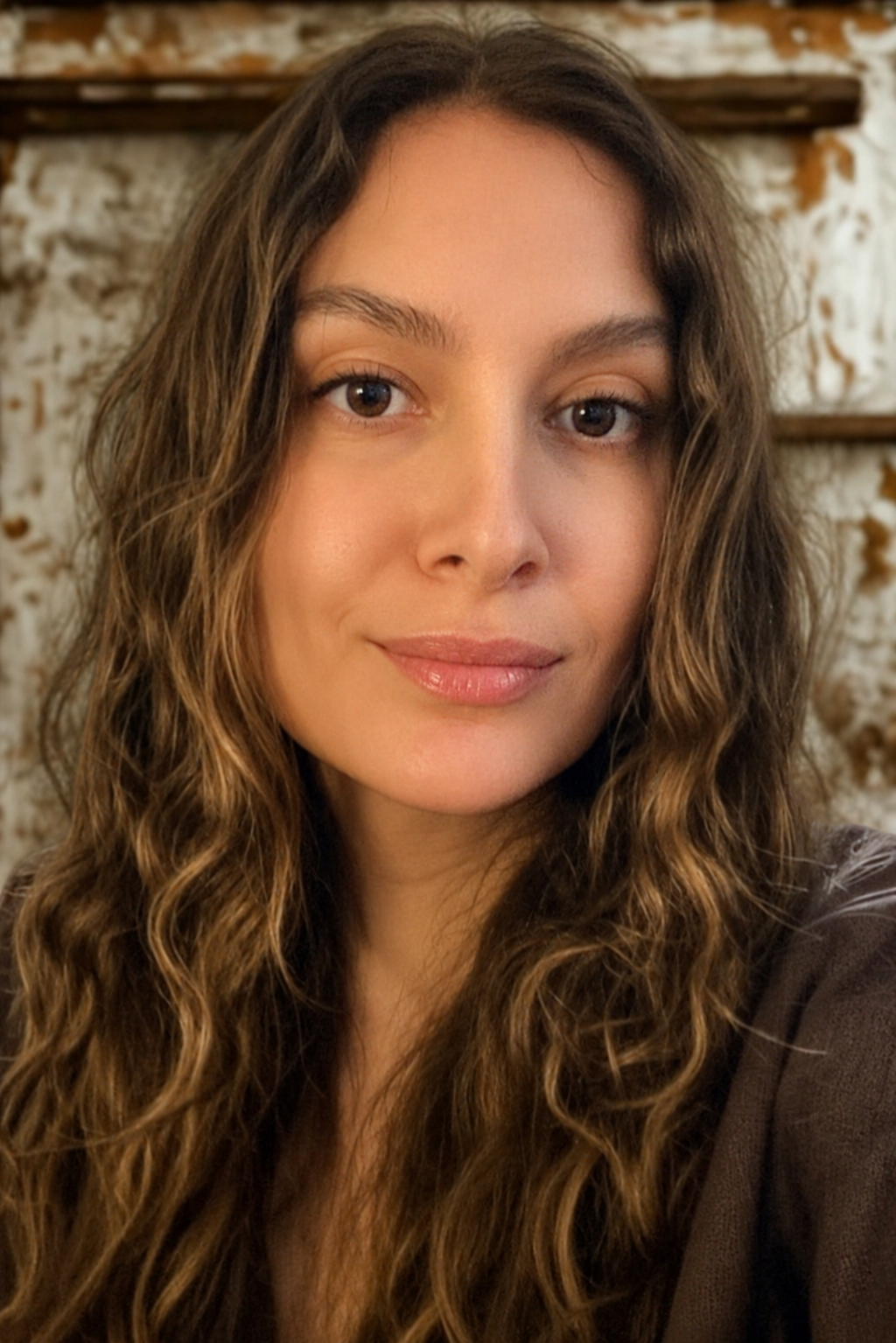
Hello, I’m Karen Robins. Professional Art Therapist and Registered Psychotherapist (Qualifying) Providing Virtual Art Therapy in Waterloo, Ontario
I am a Professional Art Therapist and Registered Psychotherapist (Qualifying) working with adults and children in Waterloo and surrounding communities through virtual art therapy. Each session brings together creativity, trauma-informed care, and an awareness of how the nervous system responds and heals. I believe that creativity is deeply healing and that lasting change comes through embodied experience and the kind of safety that only a genuine collaborative relationship can provide. My practice is informed by current research in neuroscience, attachment, and trauma, and by a deep belief in the brain and body's innate capacity for healing and growth. Art therapy, with the right support, can help you reconnect with creativity as a practical, empowering, and life-enhancing resource from within.