Art Therapy Vaughan ON | Creative Counselling
If you are looking for art therapy in Vaughan, you may already be carrying more than you let others see. You might be commuting into the city, managing a growing career, raising children, or supporting extended family while maintaining a composed exterior. Life here moves quickly. Responsibilities are high. From the outside, things look stable. Internally, your nervous system may feel constantly activated or quietly depleted.
Vaughan is a city built around growth and momentum. New neighborhoods, expanding families, long workdays, financial pressure, and expectations to succeed. In that environment, it can be easy to normalize tension and push through exhaustion. Therapy needs to offer something different from that pace. In our work, we slow down enough to notice what your body has been holding and begin building regulation that feels sustainable.
If you are ready for support that feels steady and grounded within your real life, you can book a consultation to explore whether this approach feels aligned for you.
Services:
Art Therapy
Language is one tool for working with difficult experience — but not the only one. Art therapy and art-making opens a different channel, through the creative process, that can reach and hold what words alone often cannot.
Part of what unfolds in sessions is an encounter with what has been beneath the surface — what the creative process draws into awareness so that it can be processed and integrated rather than remaining out of reach. Part of it is more immediate: the direct experience of how different materials, different ways of engaging with them, different textures and physical qualities shift emotion and bodily sensation in real time.
In practice this might mean finding a way to hold something overwhelming at a distance that makes it workable. It might mean discovering through movement, texture, or colour an expression or a form of settling that language has not been able to offer. Or it might simply mean using the creative process to explore — who you are, what you need, what feels like it is ready to change. Sessions take place virtually, from your own space, with simple materials, and unfold gradually through curiosity at a pace that meets you where you are.
Art Therapy for Chronic Illness and Pain Management
When the body is unpredictable, everything around it has to stay flexible. Energy runs out. Pain changes the plan. What felt accessible this morning may be gone by afternoon. Asking someone to meet the demands of traditional talk therapy on top of all of that is often asking for something that is simply not there. This is frequently where our work starts — with honest attention to what is actually available rather than what seems like it should be.
Art therapy for chronic illness offers creativity as a genuinely low demand form of support. Working with materials provides a way to hold emotion, acknowledge loss, and move through the identity shifts that come with living in a body that has changed, without requiring performance, productivity, or verbal explanation. Rather than starting from what you can no longer access, we explore what helps your system feel a little more settled today. What creates spaciousness. What allows grief to be present without overtaking the whole of experience. The act of making has its own way of supporting the body, through absorption, sensory engagement, and the kind of quiet focus that research has linked to reductions in pain perception, fatigue, and physical stress.
Art Therapy for Children
Not every child can say what is wrong. What you may notice instead is a child who reacts strongly to things that seem minor, who withdraws, who becomes harder to reach, or whose behaviour shifts in ways that feel sudden and confusing. Children carry stress in the body first. Language comes later, and when it is not yet available, the experience has to find somewhere else to go.
In art therapy for children and adolescents, we use the creative process to give it somewhere to go. Through art and play-informed sessions, children develop tools for regulating emotion, expressing what is difficult, and building resilience that does not rely on being able to explain what they are feeling. The work attends closely to what the process of making does, how it supports the nervous system, helps children navigate stress, and becomes something they can come back to as a natural way of being with whatever is alive for them. Creating also gives children a space to explore and know themselves better, their feelings, their preferences, their sense of what they can do. The confidence and pride that come from that exploration are a meaningful part of the work.
Complex PTSD
Reactions that arrive before you have chosen them. A body that stays on alert even when nothing is wrong. Anger that surprises you. Numbness where you expected feeling. A long-standing habit of putting your own needs aside before anyone has asked you to. If these experiences feel familiar, you are not imagining them and they are not your fault. They are recognisable features of Complex PTSD, patterns the nervous system developed in response to prolonged and relational difficulty.
In our work together, trust and safety are not assumed but built, carefully and at a pace that is genuinely yours. Through the creative process we approach what has been painful without requiring it to be named or explained in full before you are ready. Materials allow us to work with experience at a distance. Pacing and choice are built into the work from the beginning. We focus on what helps you feel more settled in the present moment.
Chronic Illness and Disability Therapy
Illness and disability shape every part of how a person lives, not only what the body can do, but how a person feels about themselves, how they move through relationships, and how they make meaning of their experience over time. For some this means working through the grief of what changed, the body before diagnosis, the identity and roles that shifted, the version of the future that had to be released. For others it means spending a life inside a body that required more from you than most, in spaces that were not designed with your needs in mind, carrying the emotional weight of that without the acknowledgment it deserves.
Therapy for chronic illness and disability can work with a range of creative modalities, offering expressive tools that fit individual preferences, comfort levels, and accessibility needs.
Support for Neurodivergent Women
It takes a particular kind of effort to function well in environments built for a different kind of nervous system. Rehearsing what you will say before you say it. Recovering from interactions that others move through without apparent effort. Receiving the message that you are too sensitive or too intense, when the reality is that you are simply processing more information more deeply than most people around you realise. If therapy has previously felt abstract, overly verbal, or quietly invalidating, your experience of it makes sense.
Neurodivergent-affirming therapy starts from a genuinely different place. How your system works is not something to compensate for here. It is the foundation the work is built around. Pacing, sensory load, structure, and clarity receive real attention as part of how sessions are held. When language feels overwhelming or insufficient, the creative process offers a concrete and grounded alternative. The work does not stay fixed while you try to fit yourself into it. It moves to meet you.
Anxiety & Depression
On the surface, anxiety and depression can look like opposites. Internally, they often coexist. Your mind already running when you wake up. Getting through the day, meeting what is asked of you, functioning by most measures, while something inside feels stretched thin and worn. At other times the switch flips in a different direction. Everything becomes muted. Motivation is somewhere you cannot locate. You feel heavy, or numb, or increasingly like you are not quite inhabiting your own experience.
Anxiety and depression therapy here approaches what is living beneath the urgency or the collapse with genuine curiosity. Not to engineer a different perspective or push toward positivity, but to help the nervous system find its way back to flexibility and ease. Through the creative process, colour, texture, movement, and pressure offer a way of working with regulation in the body directly, restoring a felt sense of safety and connection.
Therapy for Narcissistic Abuse
What certain relationships leave behind is not always obvious at first. You find yourself replaying conversations trying to understand what was real. You question whether your perception can be trusted, whether you asked for too much, whether your sensitivity was the actual problem. Confidence in your own internal signals may have eroded so slowly and so thoroughly that the doubt now feels like it has always been there.
What lingers is not only memory. It is the confusion that surrounded what happened. The self-doubt that became automatic. The vigilance that now arrives in relationships where there is nothing to be vigilant about.
Therapy for narcissistic abuse begins with your experience being witnessed and received without minimisation or question. Through the creative process, experiences that felt destabilising are externalised so that they can be seen and worked with from outside rather than only carried internally. We work toward separating your voice from the one that gradually took its place, supporting your body in relearning what it feels like to be genuinely safe, and rebuilding the reference points that were worn down over time.
Creative therapy
Some of what needs attention does not arrive as a crisis. It arrives as a quieter, more persistent sense that something is not quite right. That parts of you feel constricted or switched off. That you are getting through your days competently but without being fully inside them. You are not in distress in any acute sense. But you know that something feels unfulfilled and that you have lost some degree of genuine contact with yourself.
In creative therapy, we create room for play and genuine exploration without an agenda or outcome already decided. Experimenting with different art materials and processes, we work to reconnect you with what feels meaningful, explore where resistance is living, and restore a sense of possibility. Sessions are held virtually, from your own space. Over time, many people find themselves more genuinely present to their own experience, and parts of themselves that had receded quietly begin to become available again.
Therapy for burnout
When the demands placed on a person consistently exceed available resources, when recovery is limited or not possible, and when the effort required to continue has no clear end in sight, burnout is the result. It is a state of physical, emotional, and cognitive exhaustion that builds gradually and does not resolve simply through rest.
Therapy for burnout is low demand and embodied rather than performance-based or insight-driven. It does not ask you to push harder, explain yourself into clarity, or demonstrate effort toward recovery. The work begins with what is actually present: what your system can genuinely tolerate, what supports regulation, and how to build a real working relationship with your own limits from the inside out. Sessions are held virtually, from your own environment. Over time, many people find not a return to how things were before, but the foundation of something more sustainable beginning to form.
I Serve Clients In Vaughan And Nearby Areas
I serve adults, children, and teens across Vaughan through virtual art psychotherapy, including individuals in Woodbridge, Maple, Kleinburg, and surrounding communities. Many of the people I support are balancing professional demands, commuting schedules, and family life while privately managing stress or trauma. My approach integrates creativity and nervous system awareness so therapy feels steady and sustainable within your real environment.
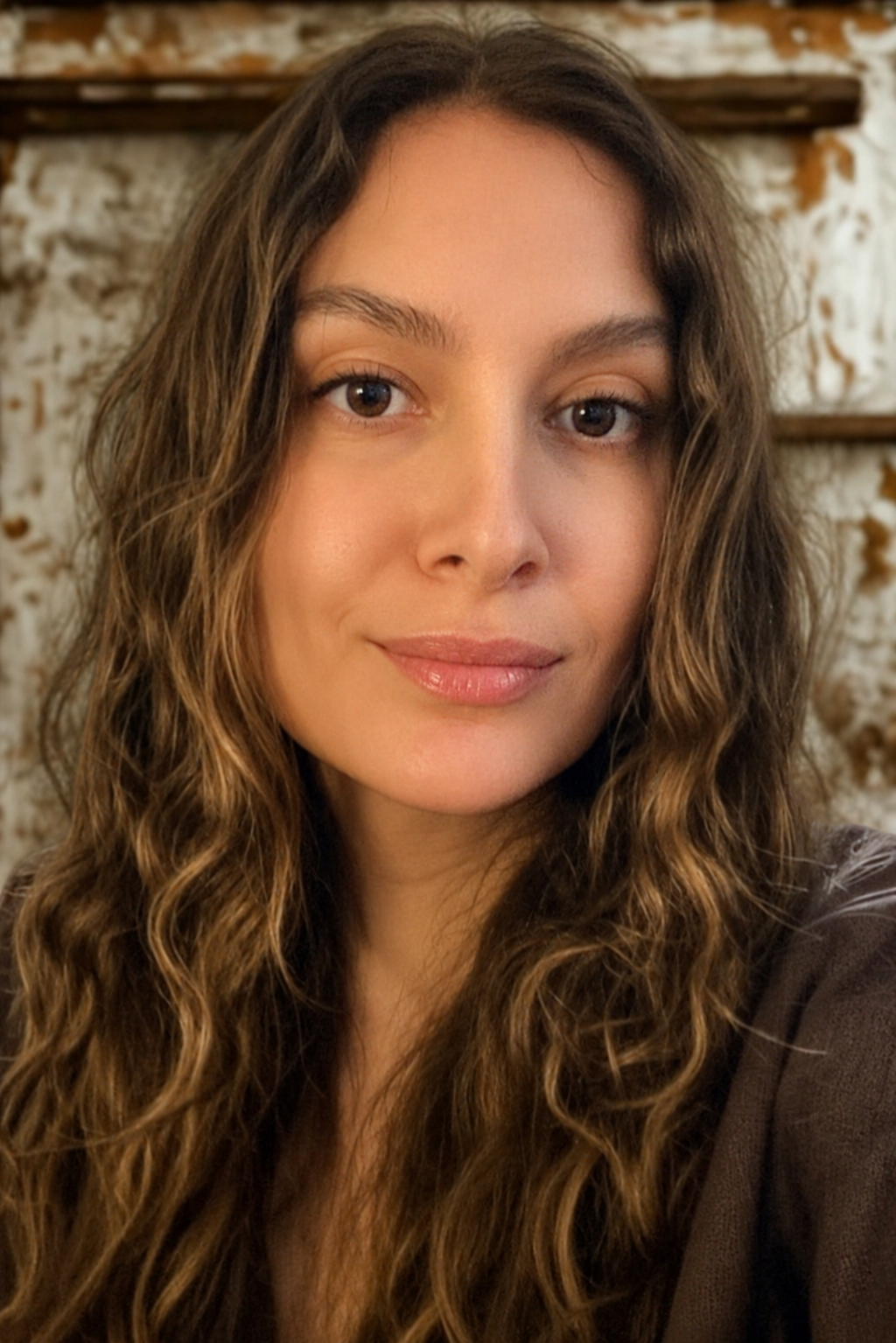
Hello, I’m Karen Robins. Professional Art Therapist and Registered Psychotherapist (Qualifying) Providing Virtual Art Therapy in Vaughan, Ontario
Hello, I’m Karen Robins. Professional Art Therapist and Registered Psychotherapist (Qualifying) Providing Virtual Art Therapy in Vaughan, Ontario
I am a Professional Art Therapist and Registered Psychotherapist (Qualifying) providing virtual art therapy to adults and children in Vaughan and surrounding communities. In every session, I bring together creativity, trauma-informed care, and an understanding of nervous system awareness to support healing that goes beyond words alone. I believe that creativity is deeply healing and that the most lasting change happens through embodied experience and the safety of a collaborative and attuned relationship. My work is grounded in contemporary research in neuroscience, attachment, and trauma, and in the belief that the brain and body have an innate and genuine capacity for healing when supported in the right way. Art therapy can help you connect to your own creativity as something practical, empowering, and genuinely life-enhancing.