Art Therapy Markham ON | Emmotional Healing
If you are looking for art therapy in Markham, you may already be balancing more than one world at once. Professional expectations, academic pressure, family responsibility, cultural values, and long workdays that rarely feel simple. From the outside, life may appear stable and successful. Internally, your nervous system may feel tight, overstimulated, or quietly exhausted from constant adaptation.
Markham is known for growth, education, innovation, and strong family systems. Many people here hold themselves to high standards. Children are expected to excel. Adults are expected to provide. There is pride in achievement, but also pressure. Therapy needs to offer something different from performance. In our work, we slow the pace and build regulation that feels steady rather than optimized.
If you are ready for support that respects your responsibilities while helping you feel more grounded day to day, you can book a consultation to explore whether this approach feels aligned for you.
Services:
Art Therapy
There are things that resist being put into words, not because they are beyond reach, but because they were never stored that way to begin with. Art therapy and art-making works with those things through the creative process, opening a channel that does not require language to function and that can access experience words alone often cannot.
Some of what happens in sessions is about bringing the implicit into view — what making something draws to the surface, how giving form to experience allows it to be processed and integrated rather than simply endured. Some of it is physical and immediate: how different materials shift how you feel in your body as you work with them, in real time, not only in retrospect.
What this looks like varies. It might mean externalising something overwhelming enough to witness it from a little distance. It might mean finding in texture, colour, or movement a way of expressing or settling what has been waiting for a form. Or it might mean using the process itself as a space of genuine curiosity about what you carry, who you are, and what is wanting to change. Sessions are held virtually, from your own space, using simple materials, and unfold at a pace that meets you where you are.
Art Therapy for Chronic Illness and Pain Management
Managing a body with its own unpredictable demands is work that most people around you do not fully see. Energy has to be rationed. Pain interrupts. Capacity shifts in ways that cannot always be anticipated or planned around. When therapy adds to that load rather than reducing it — asking for verbal processing, sustained attention, and cognitive effort you may not currently have, something has to give. This is often where we begin: not with expectations of what you should be able to bring, but with genuine attention to what is actually here.
In art therapy for chronic illness, creativity functions as a low demand resource rather than something to perform or achieve. Materials offer a way to navigate emotion, hold loss, and work through the shifts in identity that illness brings, without requiring explanation, effort, or a level of availability that may not be accessible right now. We explore what helps your system feel a little more settled. What opens up some inner spaciousness. What lets grief exist without consuming everything else. There is something in the act of making, its absorption, its sensory quality, the quiet it creates — that the body often responds to directly. Research supports this, pointing to reductions in pain perception, fatigue, and physical stress that extend beyond the session itself.
Art Therapy for Children
When a child is overwhelmed by something they cannot name, it tends to show up in their behaviour before it shows up in their words. Big reactions. Withdrawal. Sensitivity that seems to come from nowhere. Sudden shifts that leave everyone around them uncertain about what is happening. Children experience stress in the body first, and when language is not yet available to carry it, the experience needs another outlet.
Art therapy for children and adolescents provides that outlet through creativity. We use the creative process to support emotional regulation, build resilience, and give children a way of expressing what they are carrying without needing to articulate it. The work is not only about what the artwork means. It is about what the process of making does, how it supports the nervous system, helps children navigate difficult feelings, and gives them a way back to a calmer, steadier place. Making also becomes a way for children to explore their own identity, their preferences, their feelings, and their sense of what they are capable of, building confidence and self-esteem along the way.
Complex PTSD
You might find yourself reacting in ways you cannot always account for. Bracing for something that does not come. Going flat in a moment when you expected to feel present. Giving up what you need before anyone has even asked. Feeling sudden anger, or a pull to scan the room, or a disconnection from your own experience that happens before you have decided anything. These are not personality traits or signs of something broken in you. They are part of the lived experience of Complex PTSD, and they make a particular kind of sense in light of what the nervous system learned.
We begin our work by creating the conditions for trust and safety, building that foundation carefully before anything else is asked of you. The creative process allows us to approach difficult experience without needing it to be explained or fully articulated first. Materials offer distance, and the work is built around pacing and choice from the very beginning. We explore what actually helps you feel more stable in the present, at a pace your system can genuinely tolerate.
Chronic Illness and Disability Therapy
There is a great deal that chronic illness and disability ask of a person beyond the physical demands. They shape emotional life, relational experience, and the ongoing process of understanding yourself within a body that does not behave the way you expected or the way the world expects. For some people this means grieving, the body before it changed, the roles and sense of self that illness disrupted, the futures that had to be reconsidered or let go. For others it means navigating a world that was designed around a body different from theirs, and holding the emotional cost of that experience, often without adequate support or genuine acknowledgment from those around them.
Therapy for chronic illness and disability draws on a range of creative modalities, offering expressive tools that can be shaped to individual preferences, comfort levels, and accessibility needs.
Support for Neurodivergent Women
You may have spent more of your life than you realise accommodating environments that were never designed for how you think or process. Preparing carefully for conversations before they happen. Needing meaningful recovery time after interactions that others seem to find straightforward. Hearing that you are too sensitive or too much, when the honest description is that your nervous system is taking in and processing significantly more than the people around you tend to recognise. Therapy that felt overly verbal, overly abstract, or subtly invalidating may have compounded that rather than offered relief.
Neurodivergent-affirming therapy works with how your system actually functions. Pacing, sensory load, structure, and clarity are woven into how the work is held from the very beginning. When language feels slippery or when verbal engagement becomes its own source of pressure, the creative process offers something more tangible to work from. The structure here is not fixed while you try to fit yourself around it. It is built around you.
Anxiety & Depression
Anxiety and depression are often talked about separately, but for many people they are part of the same internal landscape. Waking up already tired, already running. Moving through the day, keeping up, showing up, while something underneath feels persistently thin. And then sometimes a heaviness settles in instead. Everything flattens. Motivation disappears. You feel numb or disconnected or like a version of yourself that has lost access to the things that used to feel reachable.
In our work together through anxiety and depression therapy, we get curious about what is underneath the urgency or the shutdown, not to force resolution or redirect toward something more manageable, but to help the nervous system find its way back toward balance. Colour, texture, pressure, and movement through the creative process offer a direct and embodied way of restoring a sense of safety and connection that does not depend on articulation.
Therapy for Narcissistic Abuse
After some relationships, the most persistent damage is not to memory but to trust in your own perception. Conversations replay. You search them for evidence that your reactions made sense, that what you felt was real, that you were not simply too sensitive or too demanding as you were led to believe. The internal compass that you once relied on may have been so consistently undermined that you stopped trusting it altogether.
What you carry forward is not only what happened. It is the confusion that made it so difficult to name while it was occurring. The self-doubt that settled in and made itself at home. The hypervigilance that followed you into relationships that had nothing to do with it.
Therapy for narcissistic abuse begins with your experience being received without question, minimisation, or reframing. Through the creative process, what felt destabilising is brought outside of you so it can be witnessed and worked with rather than simply absorbed. Gradually, we work to separate your voice from the one that replaced it, help your body relearn what genuine safety feels like from the inside, and restore the internal reference points that were quietly and systematically worn away.Sonnet 4.6
Creative therapy
Therapy does not require a dramatic reason to begin. Sometimes what brings someone here is a quiet sense that something inside has gone unused for too long. That parts of them have receded while they kept up with everything else. That they are present enough in their daily life but not quite present to themselves. There is nothing acute to point to. But the sense of not being fully in touch with yourself is real, and it has started to matter.
Creative therapy offers space for play and exploration rather than analysis or problem-solving. Through experimenting with different art materials and creative processes, we explore what feels meaningful to you, where things feel constricted or resistant, and what begins to open when there is room for curiosity without a fixed destination. Sessions are held virtually, in your own environment. Over time, many people find a more genuine and curious relationship with their inner world, and discover parts of themselves that had simply been waiting for some attention and space.
Therapy for burnout
Burnout is a state of physical, emotional, and cognitive exhaustion that accumulates through prolonged stress, particularly in environments where demands consistently outpace resources, where recovery is not built in or accessible, and where the effort required to continue has no clear or visible end point. It does not resolve on its own and it does not resolve through simply resting.
Therapy for burnout offers a low demand, embodied way of working that does not require you to perform recovery, push through depletion, or arrive with more capacity than you actually have. The work begins where you are: with what your system can tolerate right now, with what genuinely supports regulation, and with how to build a working relationship with your own limits from the inside rather than imposing demands from the outside. Sessions are held virtually, in your own space, without adding to a day that is already asking too much. Over time, many people find a different and more sustainable way of relating to themselves and to what they ask of themselves gradually beginning to take hold.
I Serve Clients In Markham And Nearby Areas
I serve adults, children, and teens across Markham through virtual art psychotherapy, including individuals in Unionville, Cornell, Box Grove, and surrounding communities. Many of the people I support are balancing professional ambition, academic pressure, and multigenerational family responsibilities while privately managing stress or trauma. My approach integrates creativity and nervous system awareness so therapy feels steady and sustainable within your real life.
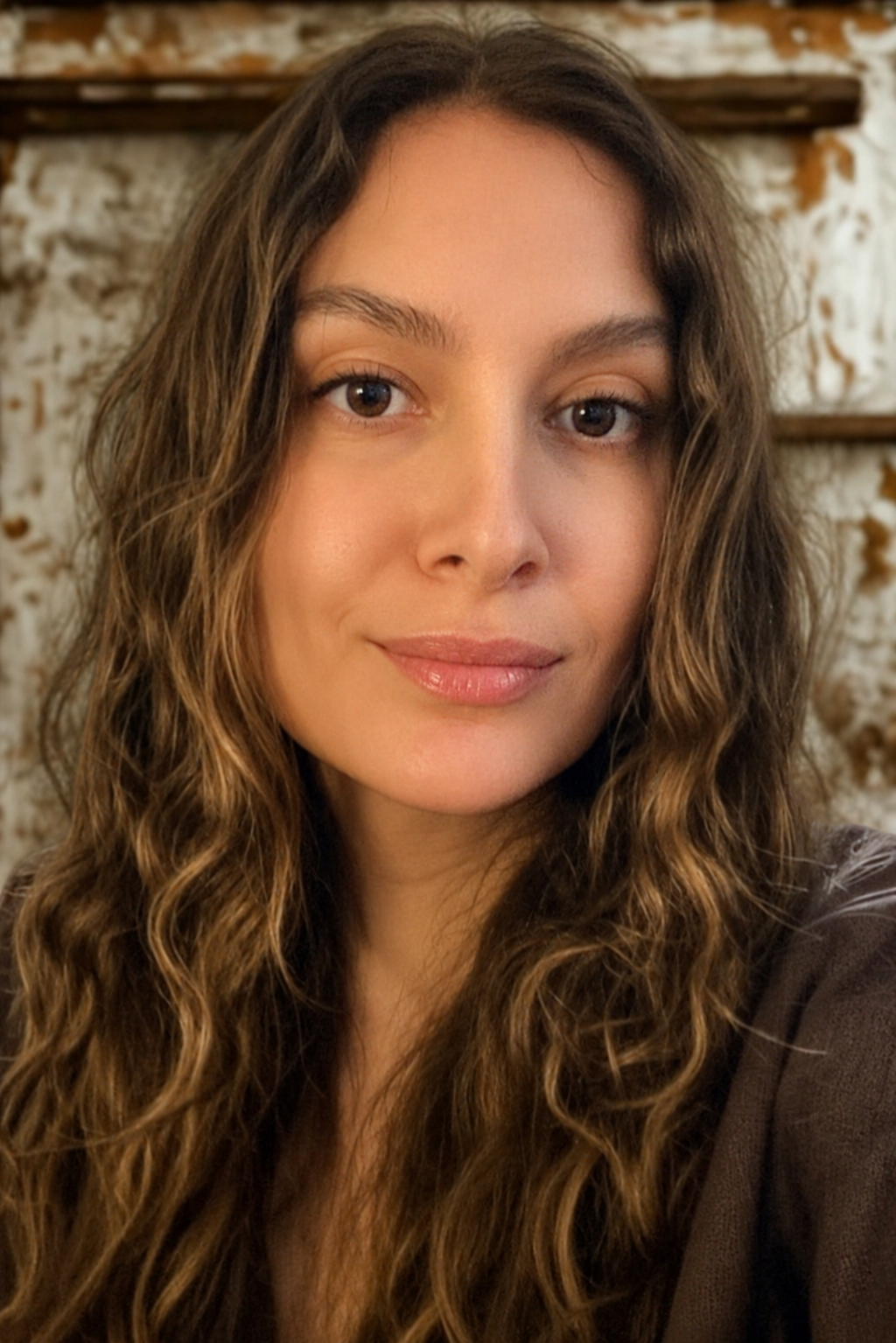
Hello, I’m Karen Robins. Professional Art Therapist and Registered Psychotherapist (Qualifying) Providing Virtual Art Therapy in Markham, Ontario
Hello, I’m Karen Robins. Professional Art Therapist and Registered Psychotherapist (Qualifying) Providing Virtual Art Therapy in Markham, Ontario
I am a Professional Art Therapist and Registered Psychotherapist (Qualifying) working virtually with adults and children in Markham and the surrounding region. My practice integrates creativity, trauma-informed care, and nervous system awareness into every session, supporting healing that is felt in the body and not only understood in the mind. I believe that creativity is deeply healing and that lasting change comes through embodied experience and the safety of a collaborative therapeutic relationship built on genuine trust and care. My approach is informed by current research in neuroscience, attachment, and trauma, and by an enduring belief in the brain and body's innate capacity for healing and transformation. With guided support, art therapy can help you access your creativity as an inner resource that is practical, empowering, and life-enhancing.