Art Therapy Hamilton ON | Creative Counselling
If you are looking for art therapy in Hamilton, you may already feel the tension between strength and exhaustion. You move through your days managing work, family, responsibilities, maybe commuting along the QEW or navigating shift work tied to healthcare, education, or industry. On the outside, you are capable. Inside, your nervous system may feel braced, overstimulated, or quietly depleted.
Hamilton has its own rhythm. A mix of steel city history, growing neighborhoods, university life, and natural landscapes near the escarpment. It is resilient. It is hard work. It is also a place where many people carry stress privately while appearing steady. Therapy needs to meet that reality without adding more pressure.
In our work, we slow down enough to notice what your body has been holding. Through creative process, you begin to build tools that support regulation and clarity in daily life. If you are ready for support that feels grounded and sustainable, continue reading to see how we might work together or book a consultation now.
Services:
Art Therapy
Words are one way into experience. Art therapy and art-making offers another — a channel through the creative process that does not require explanation to work, and that can reach what language alone has not been able to hold.
Part of what unfolds in sessions is a process of making conscious what has been operating beneath the surface — giving it form, allowing it to be seen, and creating the conditions for it to be processed and integrated. Another part is what happens in the body in real time: how a particular material, a particular way of working, a texture or a resistance changes how you feel as you engage with it.
What this looks like varies from person to person and session to session. It might mean externalising something that has felt too heavy to carry internally, so it can be witnessed from a little distance. It might mean discovering in colour, texture, or movement a way of settling or expressing what has been waiting for a form. Or it might mean using the creative process as a space of genuine inquiry — into what you need, what you want, and what is ready to shift. Sessions are held virtually, from your own space, using simple materials, unfolding at a pace that is genuinely yours.
Art Therapy for Chronic Illness and Pain Management
Chronic illness and persistent pain ask a great deal of a person — not only physically, but in the constant mental effort of adjusting, anticipating, and negotiating around a body that does not behave predictably. Energy is unreliable. Pain interrupts. Capacity varies in ways you cannot always plan for. A form of therapy that demands sustained cognitive output on top of all of that is often simply not the right fit. This is where our work starts — with what is genuinely available, not what seems like it should be.
Art therapy for chronic illness uses creativity as a low demand support rather than another form of effort. Working with materials offers a way to hold and navigate emotion, process loss, and move through the identity shifts that illness brings — without requiring productivity, explanation, or a level of availability you may not currently have. We explore what helps your system feel steadier today. What opens inner spaciousness. What allows grief to be present without overtaking everything else. Research supports what many people experience directly: that the absorption, sensory engagement, and quiet focus of making can reduce pain perception, fatigue, and physical stress both during and after the creative process.
Art Therapy for Children
You may have noticed your child reacting in ways that are hard to explain. Big emotions that seem to arrive without warning. Withdrawal. Sensory sensitivity. Sudden changes in behaviour. Children feel stress in their bodies before they find words for it, and when words are not there, the experience has to come out somewhere.
In art therapy for children and adolescents, we use creativity to give it somewhere to go. Through art and play-informed approaches, children build capacity to regulate emotion, express what they are carrying, and develop resilience over time. What matters is not only what a child creates, but what the act of creating does, how it supports the nervous system, helps children move through difficult feelings, and gives them a way of returning to a steadier place. Creativity becomes something a child can come back to again and again, a natural way of processing and being with whatever is alive for them. Making also gives children room to explore who they are, what they feel, and what they are capable of, and the confidence that comes from that exploration is part of the work.
Complex PTSD
You may notice yourself responding in ways that do not quite match the situation. A reaction that is stronger than you expected. A shutdown that arrives before you chose it. A constant low-level scanning that does not seem to switch off even when you are somewhere safe. Or a pattern of putting your own needs aside before anyone has asked you to. These are some of the ways that Complex PTSD shows up in daily life, not always dramatically, but persistently.
In our work together, we start by creating the conditions for trust and safety. The creative process allows us to move toward difficult experience without needing it to be named or explained before it can be worked with. Materials provide distance, and the work is paced carefully around what you can actually tolerate. We focus on what helps you feel more stable in the present moment, without rushing past what your system is not yet ready for.
Chronic Illness and Disability Therapy
Chronic illness and disability reach into every dimension of a person's life. The physical experience is only one part of it. There is also the emotional reality, the relational impact, and the ongoing process of understanding yourself within a body that sets its own terms. For some people this means grieving, the body that changed, the identity and roles that shifted with it, the version of the future that is no longer available. For others it means a lifetime of moving through a world not designed for how their body works, and holding the weight of that without enough support or recognition.
Therapy for chronic illness and disability can draw on a range of creative modalities, offering expressive tools suited to individual preferences, comfort levels, and accessibility needs.
Support for Neurodivergent Women
Years of adapting to spaces that were not built for you leave a mark. Conversations prepared for in advance. A recovery period needed after interactions that others move through without effort. A long history of being described as too sensitive or too intense, when the reality is simply that your nervous system processes more information more deeply than most people around you recognise. Therapy may have compounded this rather than helped, asking for verbal fluency, abstract reasoning, or a way of engaging that did not feel like your own.
Neurodivergent-affirming therapy does not ask the same things. The work here is built around how your body actually functions. Pacing, sensory load, structure, and clarity are attended to as part of the clinical work rather than as accommodations added afterward. When language feels insufficient or overwhelming, the creative process offers something more grounded to hold onto. You do not have to adjust to fit the approach. The approach adjusts to fit you.
Anxiety & Depression
Anxiety and depression are often treated as separate experiences, but they frequently share the same inner life. The mind running before the day has begun. A persistent sense of being worn down beneath a surface that looks functional. Meeting expectations, responding, showing up, while something underneath feels increasingly thin. And then sometimes the opposite, everything going quiet and flat, motivation gone, heaviness settling in, a disconnection from yourself that is hard to describe to anyone who has not felt it.
Through anxiety and depression therapy, we approach what is happening beneath the urgency or the numbness with curiosity rather than pressure. Not to force insight or redirect toward positivity, but to help the nervous system find its way back toward ease and regulation. Colour, texture, movement, and pressure through the creative process offer something the body can engage with directly, in a way that talking around the experience often cannot.
Therapy for Narcissistic Abuse
Certain relationships leave a specific kind of residue. You question your own memory. You replay conversations trying to locate where you got it wrong. You wonder whether your reactions were too big, your needs too much, your perception simply unreliable. By the time the relationship ended, or even long before it did, your trust in your own internal experience may have been quietly and systematically worn down.
What you are left with is not only the events themselves but everything that gathered around them. The confusion. The habit of self-doubt. The way your nervous system now scans new relationships for signs of the same danger.
Therapy for narcissistic abuse begins with your experience being received exactly as it is, without being questioned, reframed, or made smaller. Through the creative process, what felt destabilising is brought outside of you where it can be witnessed and worked with rather than only carried. We begin separating your voice from the one that replaced it, helping your body relearn what safety genuinely feels like, and rebuilding the internal reference points that eroded over time.
Creative therapy
What brings people to therapy is not always urgent. Sometimes it is a quieter pull. A sense that something inside is underused, that parts of you have receded while life made its demands, that you are getting through each day without being fully present to it. There is no crisis. But something feels unfulfilled, and you know you are not as connected to yourself as you would like to be.
In creative therapy, we create room for play and exploration without an agenda attached to it. Experimenting with different art materials and processes, we work toward finding what feels meaningful, what feels resistant, and what wants to come back online. Sessions are virtual and take place in your own environment. Over time, many people find a renewed and more genuine relationship with their inner world, and parts of themselves that had been quiet for a long time begin to become available again.
Therapy for burnout
Physical, emotional, and cognitive exhaustion that builds through prolonged stress is what burnout actually is. It tends to develop in contexts where demands consistently exceed available resources, where recovery is limited or cut short, and where the effort required to continue has no clear or foreseeable end. It is not resolved by simply stopping, because the system that needed to recover has already been running past its limits for too long.
Therapy for burnout offers a low demand, embodied way of working that does not require you to push through, explain yourself, or perform a version of recovery. It begins with where you actually are: what your system can genuinely tolerate, what supports regulation, and how to build a working relationship with your own limits from the inside rather than imposing one from the outside. Sessions are held virtually, in your own environment. Over time, many people begin to find something more sustainable emerging in place of what had been running them down.
I Serve Clients In Hamilton And Nearby Areas
I serve adults, children, and teens across Hamilton through virtual art psychotherapy, including individuals in Westdale, Stoney Creek, Ancaster, and surrounding communities. Many of the people I support are balancing demanding work schedules, family responsibilities, and the physical and emotional weight of busy daily life. My approach integrates creativity and nervous system awareness so therapy feels steady, practical, and usable within your real environment.
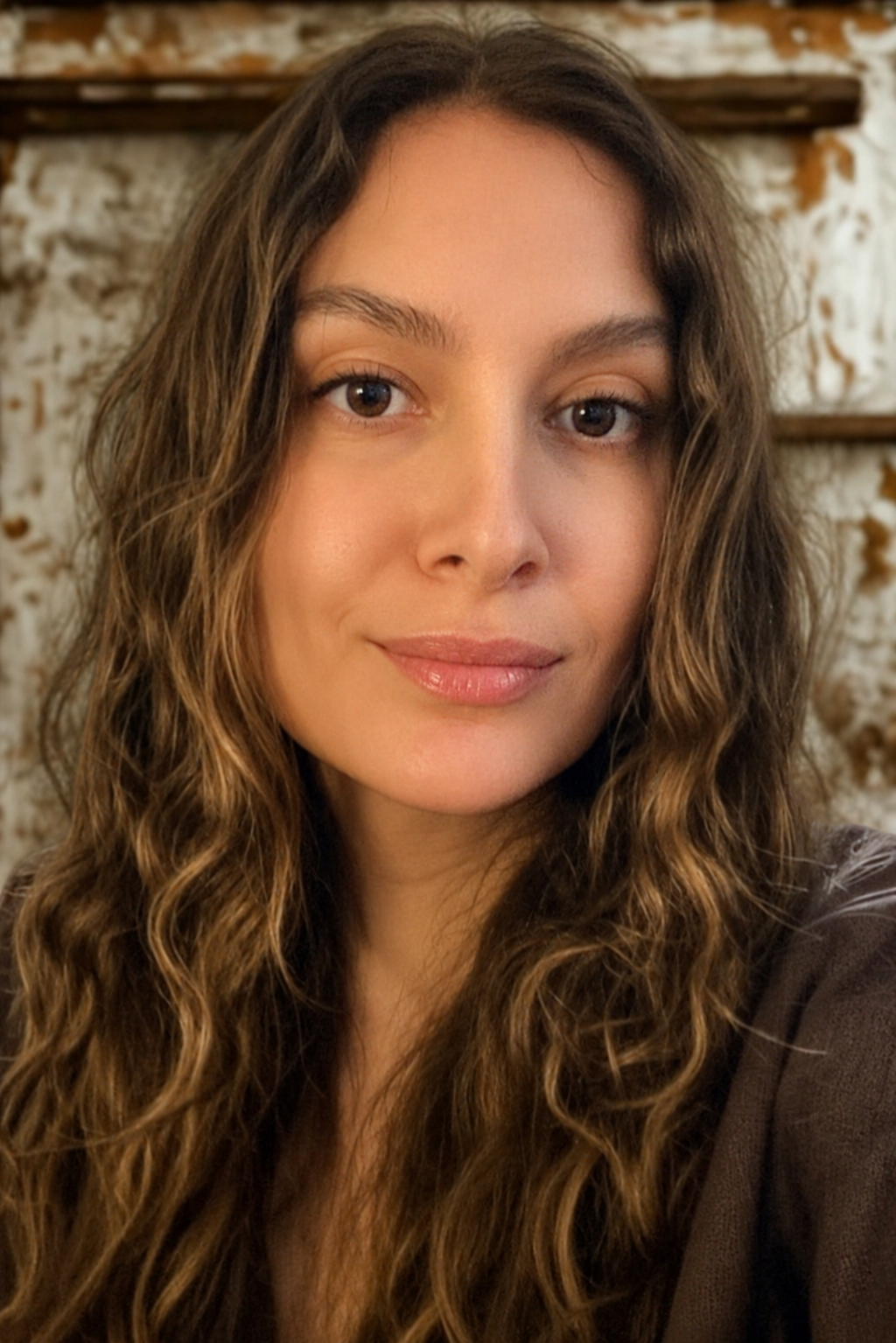
Hello, I’m Karen Robins. Professional Art Therapist and Registered Psychotherapist (Qualifying) Providing Virtual Art Therapy in Hamilton, Ontario
I am a Professional Art Therapist and Registered Psychotherapist (Qualifying) working virtually with adults and children in Hamilton and surrounding areas. My practice weaves together creativity, trauma-informed care, and nervous system awareness into a therapeutic approach that goes beyond insight alone. I believe that creativity is deeply healing and that lasting change lives in embodied experience and the safety of a relationship built on genuine collaboration and trust. My work is informed by current research in neuroscience, attachment, and trauma, and by the understanding that the brain and body are oriented toward healing when given the right conditions and support. Art therapy can help you discover your creativity as an inner resource that is practical, empowering, and genuinely life-enhancing.